

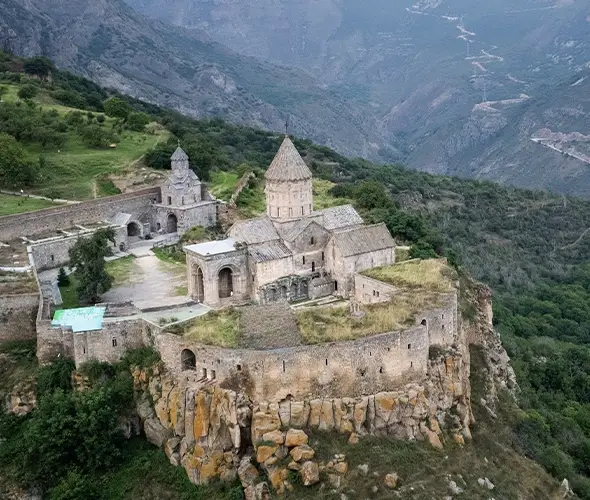
About Tatev
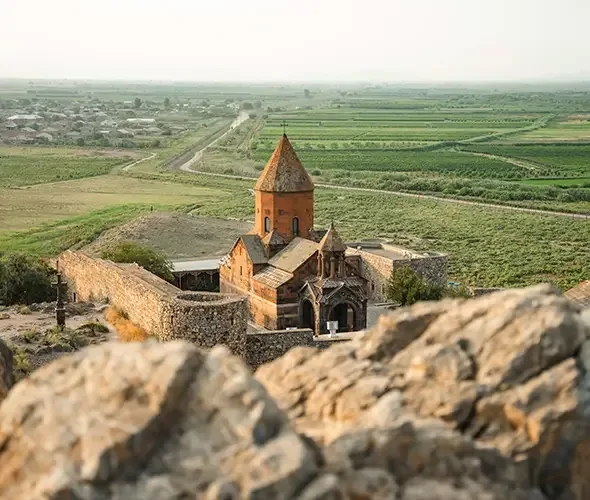
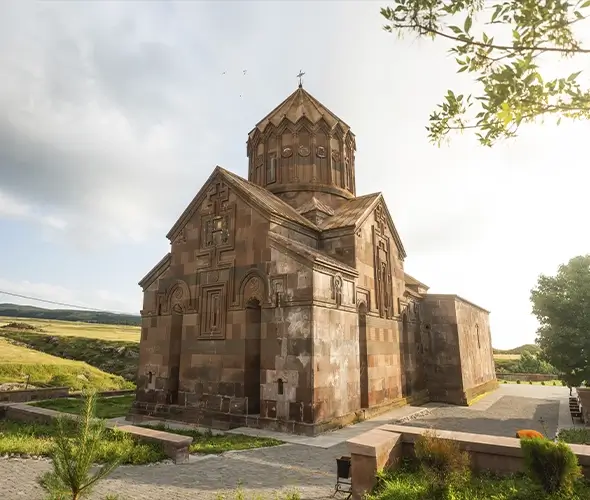
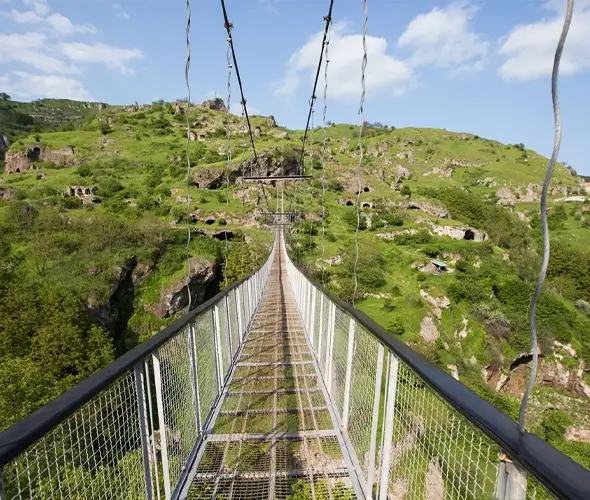
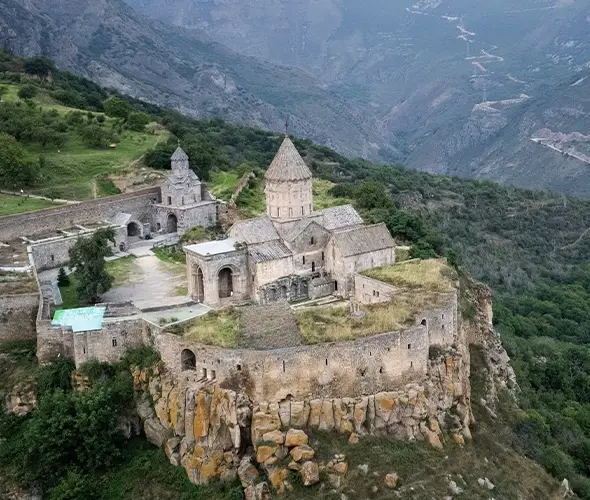
Tatev Monastery is one of the most remarkable and historically important religious and cultural monuments in Armenia, located in the Syunik Province in the south of the country, near the village of Tatev, on the edge of the deep and dramatic Vorotan Gorge. The monastery is famous not only for its spiritual significance but also for its breathtaking natural setting, as it stands on a high basalt plateau overlooking steep cliffs and a wide river canyon, creating one of the most impressive views in Armenia.
The history of Tatev Monastery dates back to early medieval times, with its main period of construction taking place between the 9th and 10th centuries. The central church of Saints Paul and Peter was built between approximately 895 and 906 AD, during a time when Armenia was experiencing cultural and political development under the rule of local noble families. Over the centuries, Tatev became one of the most important religious centers in the region, serving not only as a monastery but also as a powerful hub of education, manuscript writing, and political influence. One of the most significant aspects of Tatev Monastery is its role as a medieval educational center. In the 14th and 15th centuries, it became home to the famous “University of Tatev,” where scholars, philosophers, and theologians worked on preserving Armenian culture, language, and scientific knowledge. Monks and teachers at Tatev copied and studied manuscripts, taught philosophy, theology, music, and sciences, and helped protect Armenian identity during difficult historical periods when the country faced invasions and instability. Because of this, Tatev is often considered one of the most important intellectual centers in medieval Armenia.